Your competitor's unhappy customers are writing your roadmap on G2. Go read it.
BuzzSignal · 2026-06-16 · 3 min read
A competitor's G2 reviews are their customers telling you, for free, what they love and hate. Read the 1-3 star reviews for repeated complaints (your opening), the 5-star ones for what you must match, and watch review pace for a push. Turn the patterns into positioning and roadmap, not raw notes.
A founder you compete with closes a big round and you brace for them to pull ahead. Then you actually read their G2 reviews. Page after page of customers saying the same thing: setup takes forever, support goes quiet, the reporting is thin. That is not noise. That is a list of exactly where you can win, written by the people who would happily switch. Most founders never open it. They guess at positioning while the answer sits in public.
Reviews carry real weight in B2B. 92% of B2B buyers are more likely to buy after reading a trusted review (G2). The same reviews that sway buyers will tell you, for free, what your rival's customers love and hate.
Why are competitor reviews worth your time?
Because it is your rival's own customers telling you the truth, unprompted. Your competitor will never admit their weak spots. Their customers will, in detail, on a public page. That is voice of the customer you did not have to pay for or run a survey to get. For a small SaaS team, it is one of the highest-value hours you can spend.
What should you actually look for?
You do not need to read every review. Look for patterns:
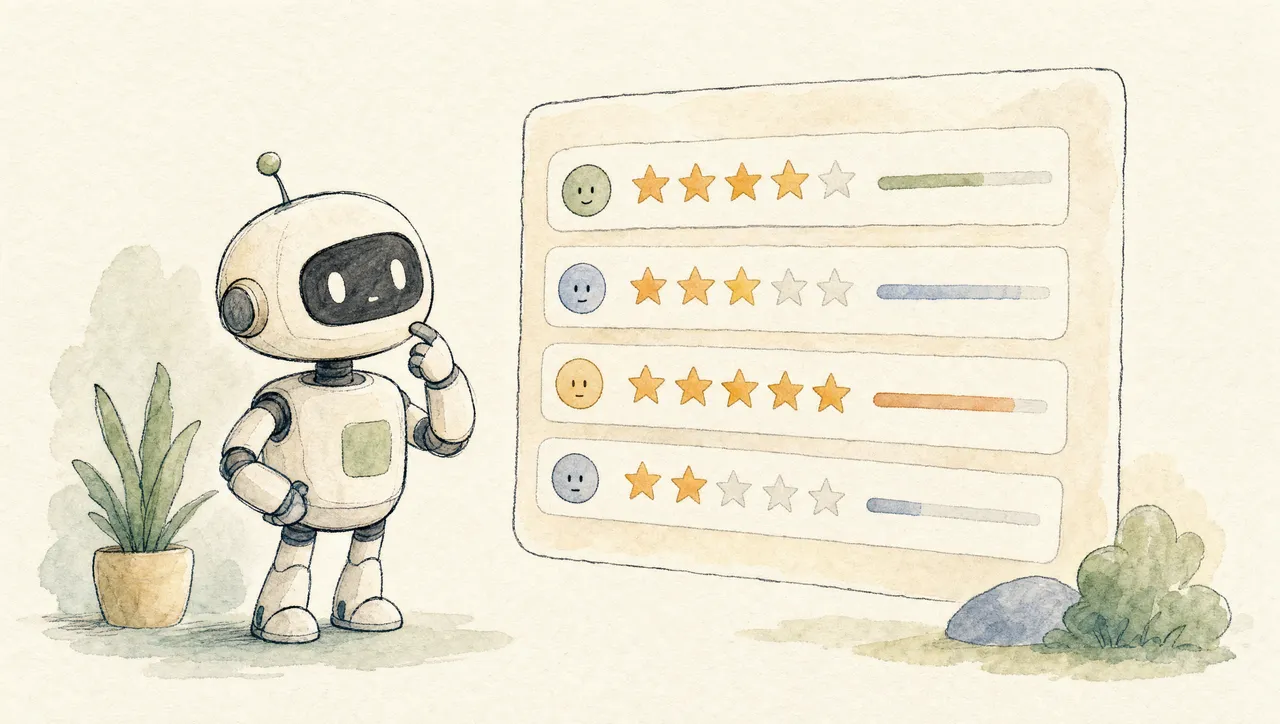
- The 1 to 3 star reviews. A complaint that shows up again and again is your opening. If ten people say onboarding is painful, "easy setup" is a positioning angle handed to you.
- The 5 star reviews. These tell you what customers genuinely value. That is the bar you have to match, not the place to differentiate.
- Feature requests. Buyers asking for the same missing thing are quietly writing part of your roadmap.
- How fast reviews are coming in. A sudden jump usually means a marketing push or a problem worth understanding.
How do you turn reviews into actual moves?
Patterns become decisions, not notes. A complaint that repeats across a rival's reviews becomes a positioning line and a sales talking point. A feature buyers keep begging for becomes a roadmap priority you can be confident about, because demand is already proven. The goal is not a tidy spreadsheet. It is two or three clear moves you would not have made otherwise.
How often should you check?
Once a week is plenty. Reviews build up slowly, so daily checking is wasted effort. The one thing worth catching quickly is a sudden spike in new reviews, which usually means your rival is running a push or hitting a problem, both of which are worth knowing about early.
What does it cost to skip this?
If you are not reading competitor reviews, you are positioning by guesswork. You might pour months into a feature nobody asked for while ignoring the complaint that would have won you a dozen switchers. The information was public the whole time. The only cost was the hour nobody spent reading it.
You are already doing the hard part. This is the easy part.
You are building the product, talking to customers, and trying to grow with a small team. Reading every competitor's reviews every week to spot the patterns is the piece that always slips. That is exactly why we built BuzzSignal: it watches your competitors, including their public reviews and activity, and sends you one short list of what changed and what it means for you. Start free with a report on your own competitors.
Sources
- G2, Customer Review Statistics (92% of B2B buyers more likely to buy after reading a trusted review): https://learn.g2.com/customer-reviews-statistics
Figures are third-party estimates and were accurate as of June 2026.
Frequently asked questions
What can I learn from a competitor's G2 reviews?
Repeated complaints in the low-star reviews (gaps you can win on), what customers love in the high-star ones (what you have to match), feature requests (roadmap hints), and how fast reviews are coming in (a push or a problem). It's free voice of their customers.
How often should I check a competitor's G2 reviews?
Once a week is plenty, since reviews build up slowly. Watch for a sudden jump in new reviews, which usually means a marketing push or a problem worth understanding.
See what your competitors did this week
Get a free BuzzSignal report on your own competitors — their pricing, promos and moves, with a ranked action plan. No credit card.
Get your free report →